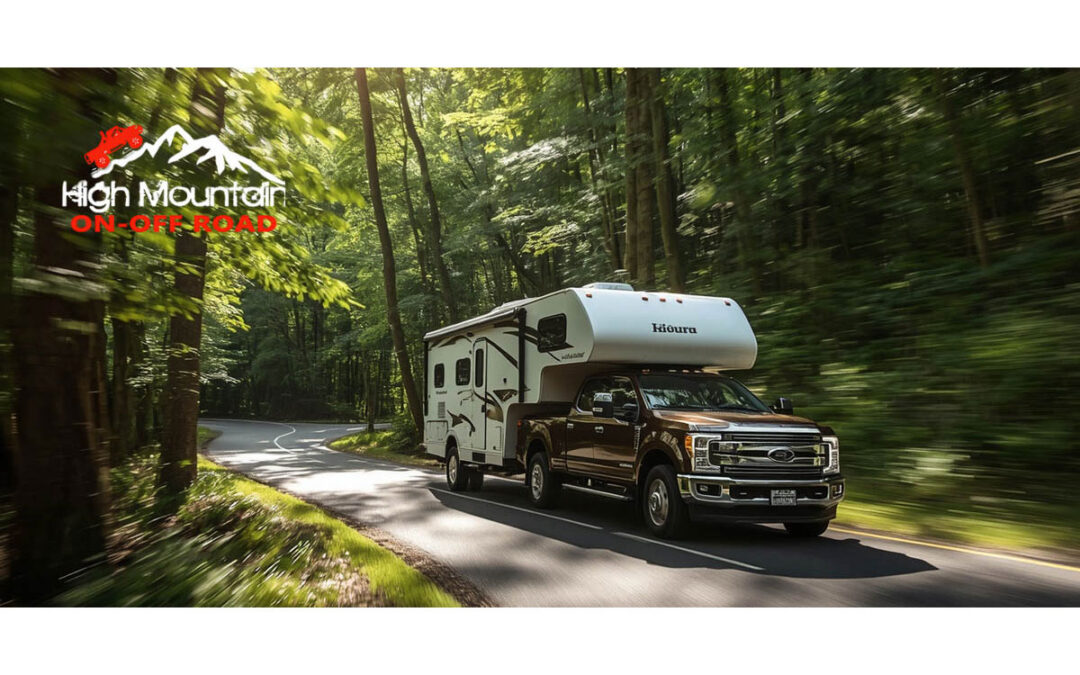
Whether you are hooking up a camper for a weekend in the Appalachian Mountains, hauling equipment to a job site, or loading trailers for a trip out of town, towing places immense stress on your vehicle.
Before you drop a trailer onto your hitch, you need to know if your vehicle can handle the strain. Pushing a vehicle past its limits risks expensive mechanical failure and compromises your safety on the road.
This checklist will help you determine if your truck is genuinely ready to haul.
- Know Your Real Weight Limits
The absolute first step is looking at the driver’s side door jamb. You will find a sticker detailing your truck’s specific weight ratings. Never guess these numbers.
- Gross Vehicle Weight Rating (GVWR): The maximum total weight your truck can carry safely, including the weight of the truck itself, fuel, passengers, and cargo.
- Gross Combined Weight Rating (GCWR): The maximum allowable weight of both your loaded truck and the loaded trailer combined.
- Payload Capacity: The total weight you can add to the truck bed and cabin. Crucially, this includes the tongue weight (the downward force the trailer coupler exerts on your hitch).
If your trailer forces your vehicle over any of these individual ratings, you need a bigger truck or a lighter load.
- Check the Braking System
Stopping a heavy load takes significantly more effort than stopping an empty truck.
Inspect your brake pads and rotors for wear before any major trip. If you hear squealing or feel a pulsation in the pedal, replace them before hookup. For larger trailers equipped with their own braking systems, test your trailer brake controller at low speeds to make sure the synchronization matches your truck’s stopping power.
- Inspect Tires and Suspension
Towing shifts massive amounts of weight to the rear axle. This means your tires and suspension system must be in peak condition.
- Tire Pressure: Check the sidewall of your tires for the maximum cold PSI rating. When hauling, you generally want your rear tires inflated to the manufacturer’s recommended maximum to support the heavy payload. Don’t forget to check the trailer tires and your spares.
- Suspension Sag: If the rear of your truck sags significantly when hooked up, your front tires lose traction and steering control becomes dangerously light. Upgrading to heavy-duty shocks, helper springs, or air suspension kits keeps your ride smooth and stable.
- Evaluate Engine Cooling and Fluids
Towing makes your engine and transmission work significantly harder, generating massive amounts of heat.
Check your engine coolant levels and inspect your transmission fluid. Dark, burnt-smelling transmission fluid is a major warning sign that your system is overheating under pressure. Installing an aftermarket auxiliary transmission cooler is one of the smartest upgrades you can make to protect your powertrain from premature failure during steep mountain climbs.
- Match Your Hitch and Electrical
Your hitch setup must match the demands of the load. Hitches are rated by classes (Class I to Class V), each with distinct weight caps. Verify that your receiver, ball mount, and hitch ball are all rated to handle the gross weight of your trailer.
Once connected, walk around the vehicle to confirm that the electrical harness is secure and that all brake lights, running lights, and turn signals replicate perfectly on the back of the trailer.
Get Setup Advice Near You
Preparing a vehicle for heavy towing takes the right components. If you need a suspension upgrade, a new hitch setup, or a thorough inspection before your next big haul, stop by High Mountain On – Off Road.
Talk to the local teams at our shops on Earl L Core Road in Morgantown, WV or on Garrett Highway in Oakland, MD to get your vehicle properly equipped for the road ahead.